It’s midnight, and you’re jolted awake by the sound of rushing water. You step into the hallway and find a pipe has burst, or maybe the toilet won’t stop overflowing. Panic sets in fast.
This is what a plumbing emergency looks like: any sudden leak, backup, or breakage that threatens your home and peace of mind. In moments like this, every second matters. Taking the right steps before help arrives can mean the difference between a quick repair and thousands of dollars in damage.
What to Do in a Plumbing Emergency: Step-by-Step Guide
According to the Insurance Information Institute, water damage is one of the leading causes of homeowners’ insurance claims in the U.S. For North Carolina homeowners, the risk is even higher due to humidity, older plumbing systems, and seasonal weather changes.
Quick action before your plumber arrives can make the difference between a simple repair and thousands in restoration costs.. Here’s your emergency homeowner’s checklist:
Step 1: Shut Off the Water Supply Immediately
Your first move is to stop the flow of water. Find your main shut-off valve, usually located near the water meter, basement, crawl space, or where the main line enters your home.
North Carolina plumbing codes require these valves to be accessible. Turning it clockwise will cut off your water supply, instantly reducing water waste and property damage.
Step 2: Turn Off Electricity in Affected Areas
Water and electricity don’t mix. If flooding occurs near outlets or appliances, shut off the power from your breaker panel right away.
The National Electrical Code (NEC) emphasizes safety in water-exposed environments. By switching off breakers to affected rooms, you reduce the risk of electrocution or electrical fires.
Step 3: Drain Remaining Water from Pipes
Even after shutting off your main valve, water lingers in your pipes. Relieve the pressure by opening faucets, flushing toilets, and letting the system empty out.
This prevents additional leaks and protects pipes from bursting under pressure, especially in colder months.
Step 4: Contain the Damage with Temporary Fixes
While waiting for the plumber, take steps to minimize damage:
- Wrap small leaks with plumber’s tape or rags.
- Place buckets or pans under drips.
- Use towels to absorb pooling water.
- Shut off specific fixture valves if available.
These temporary fixes won’t solve the issue but can buy you precious time until professional emergency plumbing repairs are completed.
Step 5: Avoid DIY Repairs Beyond Basics
It’s tempting to fix things yourself, but most DIY efforts make the situation worse. Unfamiliar tools, mismatched parts, and incorrect methods often result in bigger leaks and higher plumbing emergency repair costs.
Trust a licensed emergency plumbing company for anything beyond shutting off valves and containing leaks.
Step 6: Call 24/7 Emergency Plumbing Services
Certain emergencies can’t wait until morning:
- Burst pipes
- Sewage backups
- No running water
- Flooding
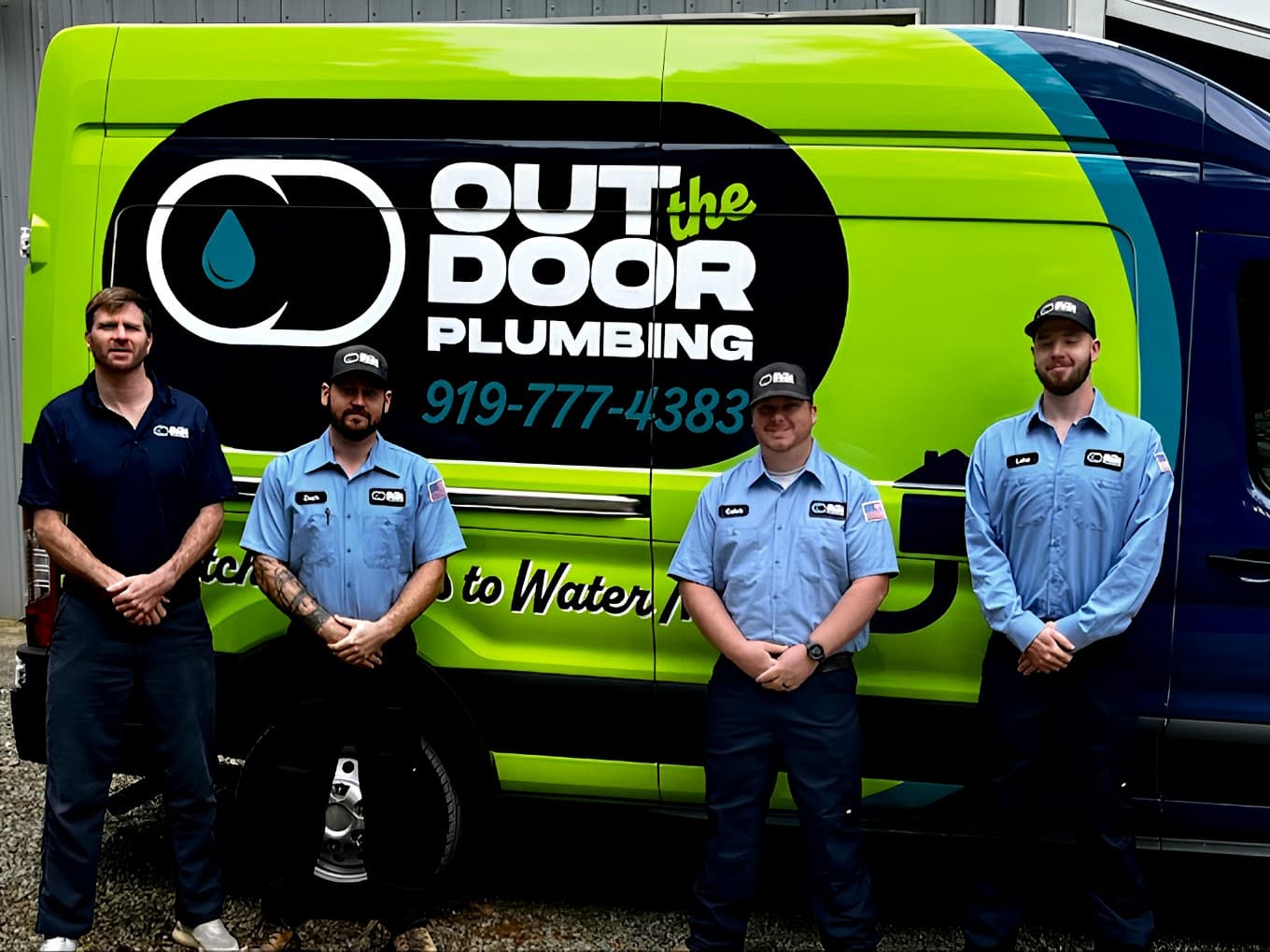
This is where a 24-hour emergency plumbing company like Out The Door Plumbing steps in. Our plumbing emergency services are available day or night to handle urgent calls and restore your peace of mind.
Step 7: Document the Damage for Insurance
Don’t forget your insurance claim. Take photos, record timestamps, and note all affected areas.
In North Carolina, insurers typically require proof of damage to process water-related claims. Keeping a detailed record makes filing faster and ensures you get proper coverage.
Step 8: Special Considerations for Commercial Plumbing Emergencies
If you own a business, plumbing failures can shut down operations for hours. Think about:
- A restaurant with a sewer backup
- An office with unusable restrooms
- A retail shop with flooding floors
Fast action is critical. Call a commercial emergency plumbing service immediately to minimize downtime and protect your reputation.
Emergency Plumbing Cost in North Carolina
Plumbing emergencies can be costly, but knowing the averages helps you prepare:
- Burst pipe repair: $500 – $1,500
- Sewer line backup: $2,000 – $6,000
- Emergency water heater repair: $300 – $1,200
- After-hours service calls: $150 – $400+ just for the visit
Factors that affect cost include:
- Time of day (nights/weekends = higher rates)
- Complexity of the repair
- Special equipment required
Waiting too long only increases expenses, such as mold remediation, drywall replacement, and flooring repairs. Investing in high-efficiency plumbing systems (low-flow toilets, tankless water heaters) reduces your long-term risk of emergencies.
24-Hour Emergency Plumbing Company in North Carolina
When you’re stuck with a burst pipe or sewage backup, you want a licensed, certified plumber who knows how to fix it fast. That’s exactly what you get with our team. We specialize in emergency plumbing repair and full plumbing system care, and we’re available 24/7 with quick response times.
You’ll always get honest pricing with no hidden fees, plus a customer-first approach that keeps your safety and long-term peace of mind front and center.
Out The Door Plumbing provides:
- Burst pipe repairs
- Sewer and drain clearing
- Water heater repairs/replacements
- Leak detection with advanced tools
- Plumbing installations and upgrades (modern faucets, tankless heaters, water-saving toilets), and we offer flexible plumbing financing options.
With years of service across North Carolina, we understand the unique challenges: aging plumbing systems, humidity-related corrosion, and seasonal water surges.Call us at 919-659-5350 today or schedule an appointment online for expert plumbing emergency services and consultations.